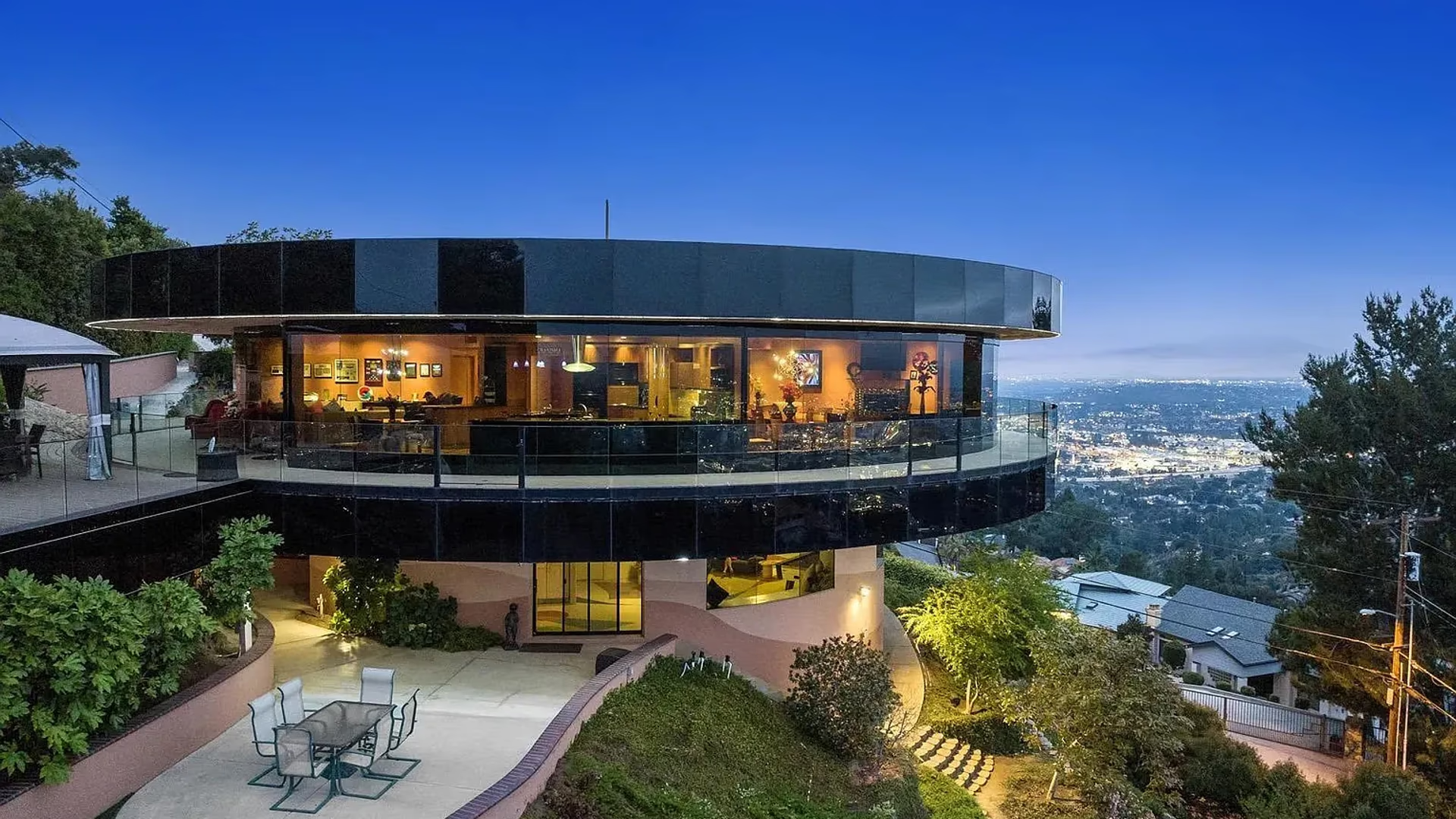

The World’s Most Famous Rotating Home
The world’s most famous rotating home is a rare architectural creation that continues to attract attention from engineers, travelers, and design enthusiasts. Unlike normal houses that stay fixed in one direction, this home slowly rotates on a circular base, giving the people inside a changing view throughout the day.
The concept may sound unusual, but it is real. The house was designed with a mechanical system that allows the entire upper structure to move in a controlled rotation. It is one of the few residential buildings in the world built with this feature at such a scale.
Where the Rotating Home Is Located
This rotating home is located in Mount Helix, San Diego, California. It sits on elevated land, which makes the rotating views even more noticeable. As the house turns, the surroundings shift between ocean views, mountain ranges, and city landscapes.
The location was chosen carefully. The open environment allows the house to rotate without obstruction from nearby buildings. It also gives residents wide visibility during every stage of rotation.
Many visitors refer to it as a private architectural landmark rather than a typical residential property.
How the Rotation System Works
The house rotates using a circular mechanical platform installed underneath the main structure. This base acts like a slow-moving motorized track.
- The home sits on a circular steel foundation
- Motors control the speed of rotation
- The movement is smooth and steady
- Utilities like water and electricity are designed to stay functional during rotation
The rotation is not fast. It is designed to be slow enough that people inside do not feel discomfort. In some settings, a full rotation can take many hours depending on how the system is configured.
The engineering focus is stability. Even during movement, the structure must remain balanced and safe for everyday living activities.
Inside the Rotating Home Design
The interior of the house is arranged like a normal home but adapted for movement. Furniture placement and room layout are designed so that rotation does not affect daily life.
Key interior features include:
- Fixed central utility core for plumbing and wiring
- Rooms arranged around the rotation axis
- Large windows to maximize changing views
- Reinforced flooring for structural balance
Because the home rotates, natural lighting changes throughout the day in a unique pattern. A room facing the ocean in the morning may face hills or city lights later in the day.
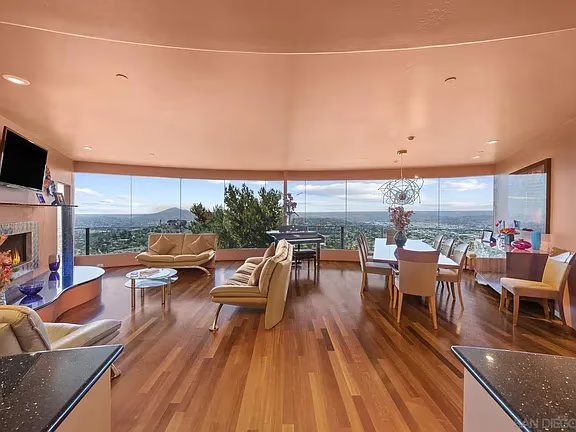
The 'Famous Rotating Home' in La Mesa - Image from zillow
Engineering Challenges Behind the Design
Building a rotating home comes with several engineering challenges. The structure must be strong enough to support movement while also functioning like a regular house.
Some of the main engineering challenges include:
- Maintaining stable electrical connections during rotation
- Ensuring water and drainage systems remain functional
- Balancing weight distribution across the rotating platform
- Preventing mechanical wear from long-term movement
The system relies on precision alignment. Even a small imbalance can affect smooth rotation over time. Engineers must regularly inspect the base system to ensure safe operation.
Daily Living Experience Inside the House
Living in a rotating home feels different from a traditional house. The movement is slow, but it creates constant visual change.
Residents experience:
- Changing sunrise and sunset angles in different rooms
- Different outdoor views without moving from place to place
- A unique sense of time passing through shifting light patterns
Daily routines such as cooking, reading, or working continue normally. The rotation is gradual enough that most activities are unaffected. However, people often notice subtle environmental changes throughout the day.
Furniture must be secured properly in some areas to prevent shifting over time due to movement vibrations.
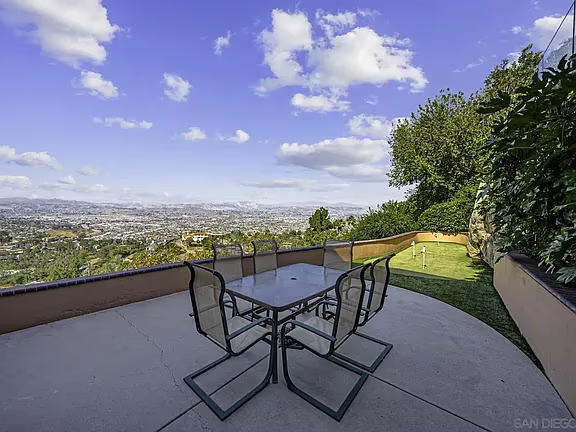
The 'Famous Rotating Home' in La Mesa - Image from zillow
Why This Rotating Home Became Famous
This house gained attention because rotating residential buildings are extremely rare. Most architecture is fixed and does not move after construction.
It became widely known due to:
- Its unusual mechanical design
- Media coverage of its rotating structure
- Interest from architecture and engineering communities
- Its location in a scenic area of California
Many people consider it a demonstration of what is possible when engineering and residential design are combined in an experimental way.
The house is often used as an example when discussing alternative housing concepts and experimental architecture projects.
Views and Environmental Experience
One of the most interesting aspects of the rotating home is the changing view. Instead of looking at a single direction, the house slowly reveals different surroundings throughout the day.
Depending on rotation timing, residents may see:
- Ocean horizons in one direction
- Mountain landscapes in another
- Urban areas with lights during nighttime rotation
This constant shift creates a dynamic living environment without requiring the residents to move physically between locations.
The lighting inside also changes naturally, reducing the need for artificial lighting during daytime hours in some positions of rotation.
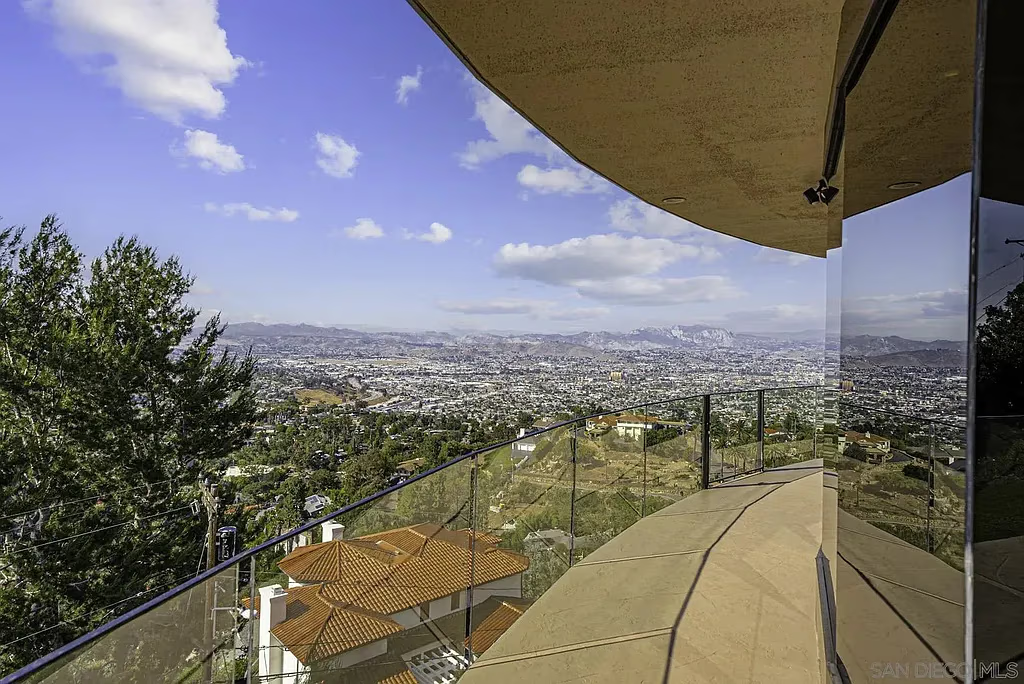
The 'Famous Rotating Home' in La Mesa - Image from zillow
Maintenance and Long-Term Operation
Maintaining a rotating structure requires regular inspection of the mechanical system. The motor system and circular base must remain clean and aligned to ensure smooth movement.
Maintenance tasks include:
- Lubricating rotating components
- Checking motor performance
- Inspecting structural balance
- Monitoring electrical connections in the central core
Over time, small adjustments are needed to keep rotation consistent. Environmental factors like temperature changes and wind exposure can also affect long-term mechanical performance.
Technicians often schedule routine checks to ensure that movement remains steady and safe for everyday use.
Architectural Influence of Rotating Homes
This rotating home has influenced discussions in architectural design communities. While not common in residential construction, it has inspired ideas for adaptive housing systems.
Some architects study rotating homes for:
- Energy-efficient sunlight exposure
- Alternative use of land space
- Mechanical integration in living spaces
Although most homes remain fixed, experimental designs like this continue to appear in concept projects and architectural exhibitions around the world.
Engineers also analyze how rotation affects long-term structural durability under normal residential usage conditions.