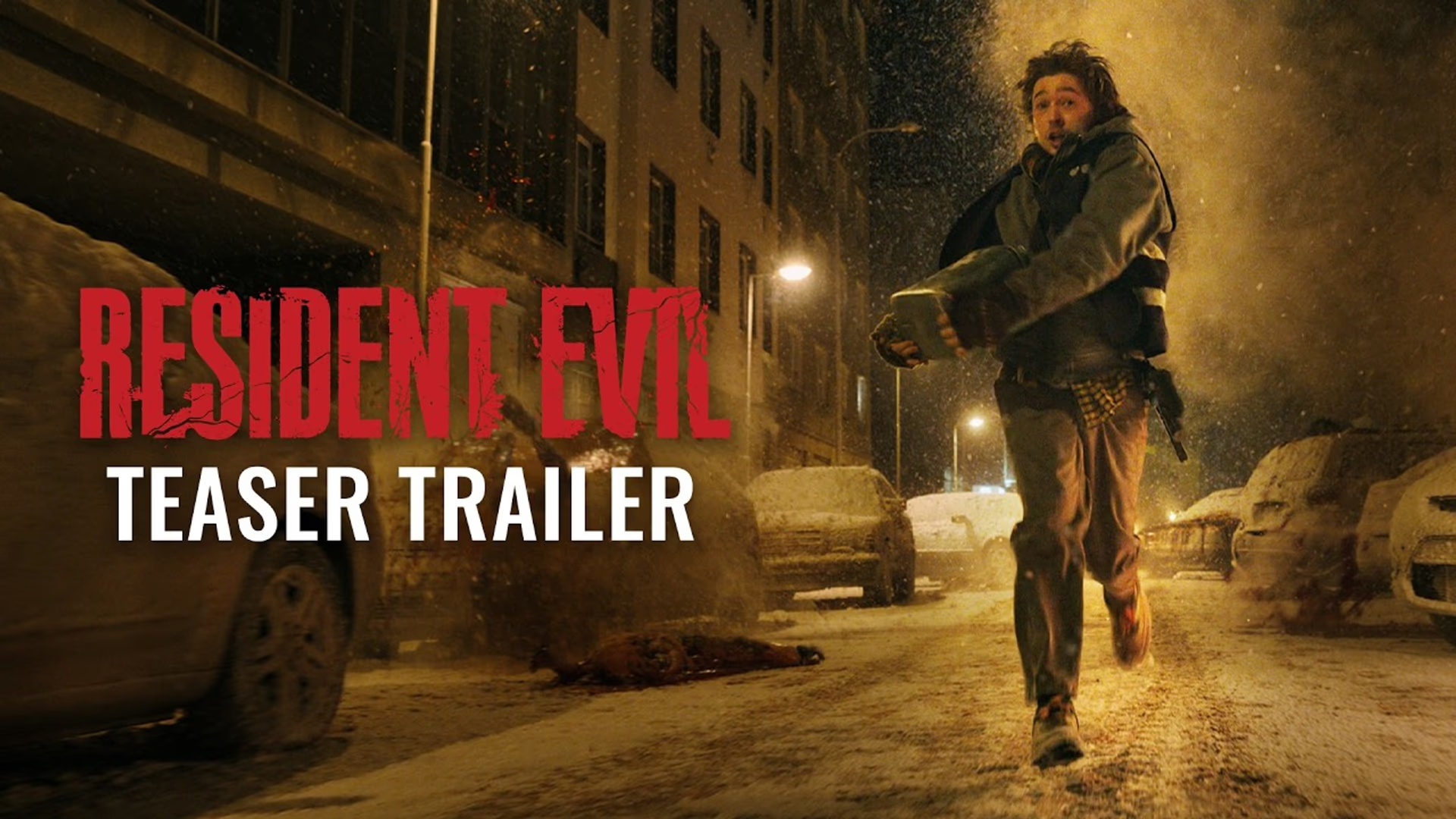

Resident Evil (2026) Official Teaser Trailer: Release Details, Story Setup and Full Breakdown
Teaser Trailer Release Overview
The official teaser trailer for Resident Evil (2026) was released in April 2026 and quickly gained attention across social platforms. It introduced a new direction for the franchise, focusing on survival horror instead of action-heavy storytelling.
The trailer was released by Sony Pictures and immediately positioned the film as a full reboot. It does not continue the previous movie storyline. Instead, it introduces a new universe inside the Resident Evil world.
The release timing was designed to build early awareness ahead of the theatrical launch scheduled for later in 2026.
Official Release Date
The movie is scheduled for theatrical release on September 18, 2026. This places it in the late summer and early fall release window, which is often used for major horror and thriller films.
The marketing campaign began months before release with teaser drops, early interviews, and short promotional clips. The teaser itself is the first major visual introduction to the new story direction.
Story Setup and Main Character
The teaser introduces a completely new character-driven storyline instead of relying on familiar game protagonists.
The main character is Bryan, played by Austin Abrams. He is described as a medical courier who gets caught in a dangerous outbreak situation during what begins as a normal delivery job.
The story setup focuses on survival rather than investigation or military response. You are placed in the middle of an unfolding crisis where escape becomes the main goal.
The central conflict builds around:
- A sudden viral outbreak
- Rapid environmental collapse
- Isolation from safe zones
- Limited resources and time pressure
The teaser avoids explaining too much. It shows fragments of the situation instead of giving full answers.
Tone and Style of the Film
The film adopts a darker survival horror tone. It focuses on fear, uncertainty, and limited visibility of threats rather than constant action sequences.
Instead of large-scale battles, you see smaller survival moments. The camera work and pacing aim to create tension in simple environments like corridors, streets, and confined spaces.
The teaser highlights:
- Low-light environments
- Sudden threat encounters
- Fast panic reactions
- Sound-driven suspense moments
This approach places emphasis on atmosphere rather than continuous action scenes.
New Direction for the Resident Evil Franchise
This version of Resident Evil is not connected to previous live-action films. It is also not a direct adaptation of a single game storyline.
Instead, it builds a new narrative inside the same universe. The goal is to introduce a fresh entry point for viewers who may not be familiar with earlier movies or games.
Key changes in this reboot include:
- New original main character instead of established game heroes
- Independent storyline not tied to earlier films
- Focus on survival horror instead of action sequences
- More grounded and personal storytelling style
This direction gives the creators more freedom to explore new situations inside the outbreak setting.
Cast and Production Team
The film features a new cast lineup led by Austin Abrams as Bryan. The casting choice focuses on a younger, more grounded perspective for the survival story.
The production is handled by Sony Pictures along with established film production partners connected to the Resident Evil franchise.
The director is Zach Cregger, who is known for working in horror storytelling with strong focus on tension and pacing.
The production team aims to keep the experience closer to survival horror games, where isolation and limited resources play a key role.
Teaser Trailer Breakdown
The teaser does not reveal full plot details. Instead, it builds curiosity through short and fragmented scenes.
Some key elements shown in the teaser include:
- A normal city environment shifting into chaos
- Medical and emergency-related imagery
- Dark indoor spaces with sudden movement
- Main character reacting to unknown threats
The trailer uses quick cuts to create tension. It avoids long dialogue and focuses more on visuals and sound design.
You also see signs of outbreak progression, but the origin of the virus is not fully explained.
Setting and Environment Design
The environment plays a major role in the teaser. Locations shift between urban areas and confined indoor spaces.
The design focuses on creating situations where escape is difficult. Doors, corridors, and blocked paths are used to build pressure during scenes.
Common environment elements include:
- Empty hospital or medical facilities
- Abandoned city streets
- Dark underground or restricted zones
- Emergency lockdown areas
These settings support the survival horror theme by limiting visibility and movement options.
Character Focus and Survival Approach
The main character Bryan is not introduced as a fighter or trained soldier. Instead, he is an ordinary person placed in a dangerous situation.
This approach changes how the story unfolds. Instead of combat-driven survival, the focus is on decision-making under pressure.
Key survival elements shown in the teaser include:
- Quick escape decisions
- Limited access to safety zones
- Confusion during outbreak escalation
- Unstable communication systems
The character’s perspective is central to the storytelling approach.
Horror Design and Sound Use
The teaser shows that sound design is a key part of the horror experience. Silence is used before sudden moments of noise or movement.
You can notice:
- Sudden audio shifts during threat appearances
- Low background sound in empty environments
- Sharp noise spikes during action moments
- Limited background music in certain scenes
This creates a pattern where you rely on audio cues to understand danger before seeing it.
Gameplay Influence on Film Style
Although this is a movie, the structure feels influenced by survival horror games. The pacing and environment design reflect familiar game mechanics.
You see:
- Resource-limited survival situations
- Exploration of unsafe areas
- Sudden enemy encounters
- Focus on escape rather than combat dominance
This style connects closely to how players experience survival horror games, especially in tight and unpredictable environments.
Early Audience Reaction and Trailer Response
After the teaser release, online discussions increased quickly. Viewers focused on the darker tone and new direction of the franchise.
Common reactions include interest in the survival horror approach and curiosity about the new storyline structure. The absence of familiar characters also became a major discussion point among fans.
Many viewers are paying attention to how the reboot handles atmosphere compared to earlier adaptations.
Marketing Approach and Promotion Strategy
The marketing strategy for Resident Evil 2026 focuses on gradual information release. Instead of revealing full story details early, the campaign uses short teaser content.
Promotion includes:
- Short teaser clips
- Character-focused posters
- Interviews with cast and director
- Social media countdown campaigns
This approach builds curiosity while keeping major plot elements hidden until later promotional stages.