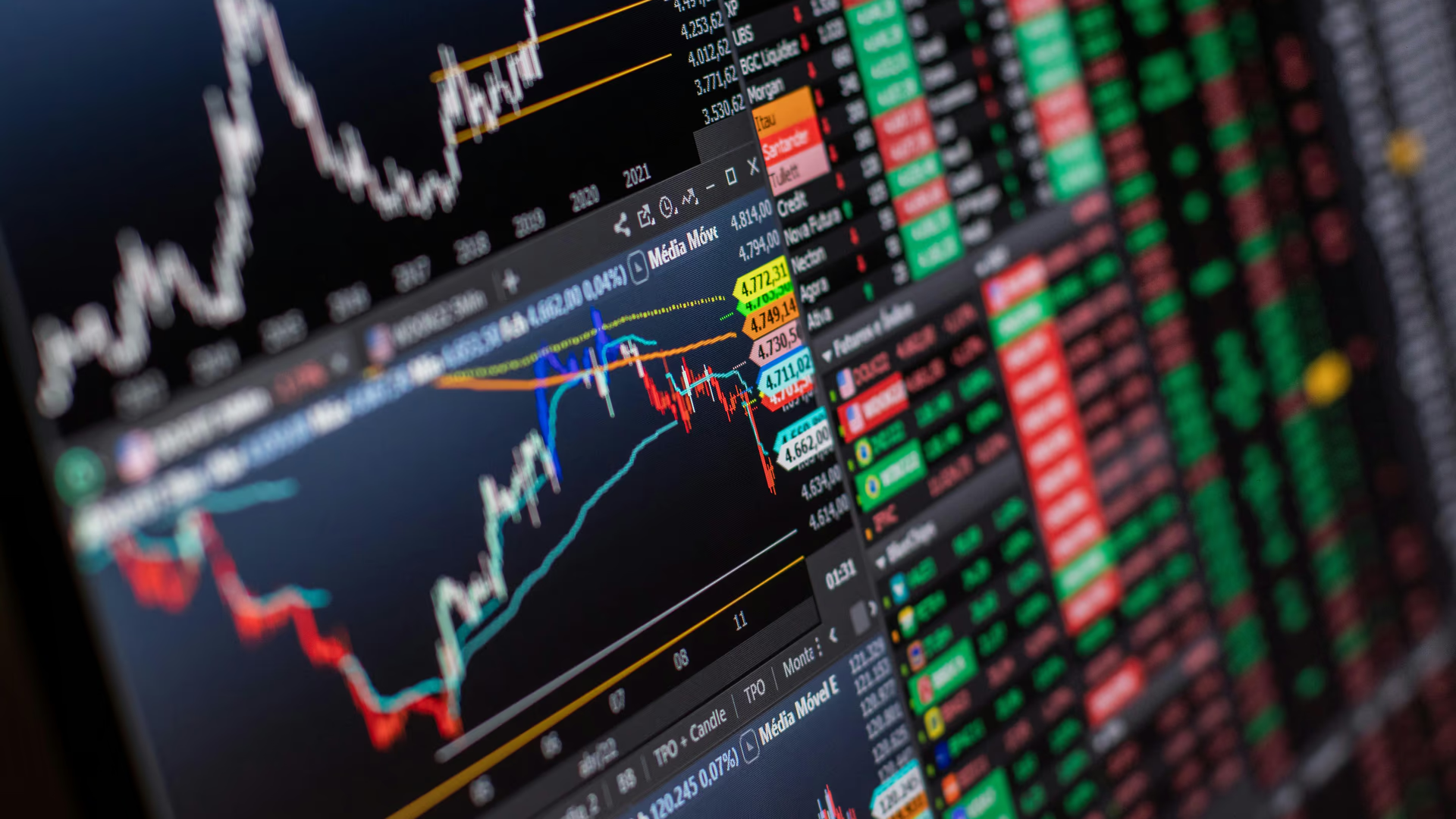

What Is Forex Trading and How to Start Trading Online
Forex trading is one of the most active financial markets in the world. Every day, trillions of dollars move between countries as people exchange currencies. If you are new to this topic, forex trading simply means buying one currency and selling another at the same time with the aim of making a profit from price changes.
Many beginners are attracted to forex because it is accessible online, does not require large starting capital, and operates 24 hours a day during weekdays. However, it is also a market where people can lose money quickly if they do not understand how it works.
What Is Forex Trading
Forex stands for foreign exchange. It is the global market where currencies are traded. When you travel or buy something online from another country, you are indirectly interacting with the forex market.
In trading, you are not buying physical money. Instead, you are speculating on whether one currency will go up or down compared to another.
For example, if you believe the euro will become stronger against the US dollar, you buy EUR/USD. If your prediction is correct, you make a profit. If not, you lose money.
Forex trading happens in pairs:
- EUR/USD (Euro vs US Dollar)
- GBP/USD (British Pound vs US Dollar)
- USD/JPY (US Dollar vs Japanese Yen)
- AUD/USD (Australian Dollar vs US Dollar)
Each pair shows how much of the second currency you need to buy one unit of the first currency.
How the Forex Market Works
The forex market is decentralized. This means there is no single central exchange like a stock market. Instead, trading happens electronically between banks, brokers, financial institutions, and individual traders.
Prices change based on supply and demand. Many factors influence currency prices:
- Interest rates set by central banks
- Economic reports like inflation and employment
- Political stability
- Global events and news
Because the market reacts quickly to news, prices can move fast within seconds.
Forex trading is not about guessing randomly. It is about understanding market movement and making decisions based on data and strategy.
Key Terms You Need to Know
Before you start trading, you need to understand basic forex terms:
1. Pip
A pip is the smallest price movement in forex. Most currency pairs move in four decimal places.
2. Spread
The spread is the difference between the buying price and selling price offered by a broker.
3. Leverage
Leverage allows you to control larger trades with a small amount of money. For example, 1:100 leverage means you can control $1000 with $10. This increases both profit and risk.
4. Lot size
This is the amount you trade. A standard lot is 100,000 units of currency.
How to Start Forex Trading Online
If you are a beginner, starting forex trading should be done step by step. Jumping directly into live trading without knowledge is risky.
Step 1: Learn the basics
Before risking money, understand how currency pairs, charts, and market movements work. Watch tutorials and read beginner guides.
Step 2: Choose a reliable broker
A forex broker is a platform that connects you to the market. You need a broker to trade online.
Look for:
- Regulated brokers
- Low spreads
- Good trading platform (like MetaTrader 4 or 5)
- Fast deposits and withdrawals
Step 3: Open a demo account
A demo account lets you trade with fake money. This is important for practice without risk.
Use it to:
- Learn how to place trades
- Understand charts
- Test strategies
Step 4: Learn basic analysis
There are two main types of analysis in forex:
- Technical analysis: studying charts and patterns
- Fundamental analysis: studying news and economic data
Most traders use a mix of both methods.
Step 5: Start with small real trades
Once you understand how the demo account works, start with a small live account. Do not invest large amounts at the beginning.
Focus on learning how your emotions react when real money is involved.
Common Trading Strategies
Forex traders use different strategies depending on their style and time availability.
Scalping
Fast trades that last seconds or minutes. Small profits but many trades per day.
Day trading
Trades are opened and closed within the same day. No positions are held overnight.
Swing trading
Trades last several days or weeks. Focus is on bigger market movements.
Position trading
Long-term trading based on major economic trends.
Each strategy requires discipline and proper risk control.
Risks in Forex Trading
Forex trading can be profitable, but it is also risky. Many beginners lose money because they ignore risk management.
Main risks include:
- High leverage losses
- Emotional trading decisions
- Market volatility
- Lack of proper strategy
It is important to only risk money you can afford to lose.
One common mistake is overtrading, where traders open too many positions without proper analysis. This often leads to losses.
Tools Used by Forex Traders
Modern forex trading is done through online platforms. These tools help traders analyze and execute trades.
Common tools include:
- MetaTrader 4 and MetaTrader 5
- TradingView charts
- Economic calendars
- Trading indicators like RSI and moving averages
These tools help you read the market and make better decisions, but they do not guarantee profit.
Practical Tips for Beginners
Starting forex trading requires patience and discipline. Many beginners rush and lose money quickly.
Here are practical tips:
- Start with a demo account first
- Use low leverage when starting
- Keep risk per trade small
- Do not trade based on emotions
- Focus on learning, not quick profit
Consistency is more important than big wins in early stages.
Some traders keep a trading journal where they record every trade, reason for entry, and outcome. This helps improve decision making over time.
Understanding market behavior takes time, and most skilled traders spend months or years improving their strategy before becoming consistent.