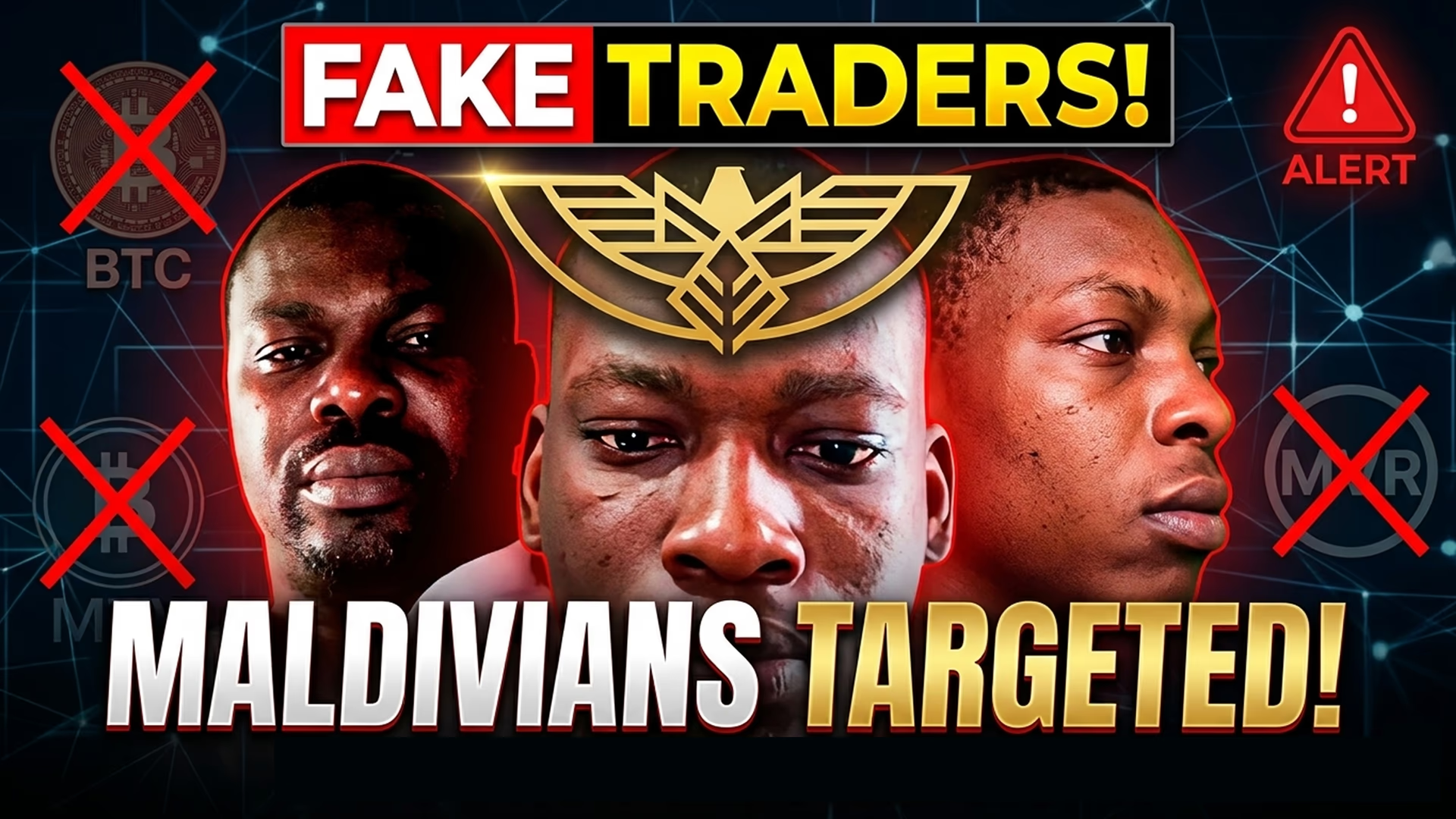

Fake Crypto Traders Are Targeting Maldivians — Here’s How the Scam Works
Online scams are increasing in the Maldives. One of the most common methods right now involves fake crypto traders. These scammers use social media, local bank accounts, and simple tricks to take money from victims.
You may see someone on social media claiming they make daily profits from trading. They show screenshots, videos, and even fake testimonials. It looks real. But behind it, there is no trading happening.
How the Scam Starts
Most scams begin on platforms like Instagram or Facebook. The scammer creates a profile that looks local. They may use a Maldivian name, photos, and even Dhivehi language to build trust.
They often present themselves as a trader or investment expert. They claim to trade Bitcoin or other cryptocurrencies. They promise fast profits with low risk.
- They follow you or send a message
- They show fake profit screenshots
- They claim to help beginners
- They say you can start with a small amount
This is the first step. The goal is to make you trust them.
A scammer attempting to convince a victim to invest in fake crypto tradingBuilding Trust With Victims
After the first contact, the scammer continues communication. They may chat daily. They may send voice notes or short videos. Some even pretend to be friendly or supportive.
They use simple tactics:
- Show “live trades” that are not real
- Send screenshots of profits
- Share fake success stories
- Act like they are helping you personally
At this stage, the victim starts to believe that the trading is real.
The Payment Step Using Local Accounts
Once trust is built, the scammer asks for money. This is where many victims make the mistake.
Instead of asking for direct crypto transfers, they often request money through local bank accounts. In many cases, these are accounts from Bank of Maldives.
This makes the scam feel safe because:
- The account looks local
- The name may match a Maldivian identity
- The transfer process is simple
Victims think they are dealing with someone inside the country. In reality, the person controlling the scam may be outside the Maldives.
What Happens After You Send Money
After the payment, the scam continues in a controlled way. The scammer will not disappear immediately. Instead, they try to keep you engaged.
You may receive messages like:
- “Your trade is active”
- “You made profit today”
- “Withdraw after next cycle”
Sometimes they even send small amounts back. This creates trust and encourages you to send more money.
In reality, there is no trading account. No Bitcoin is being traded. The money is just moving between accounts.
How the Money Actually Moves
The system behind the scam is simple but effective. It often involves multiple people and accounts.
Here is a typical flow:
- Victim sends money to a local account
- That account forwards money to another account
- Funds are mixed with other victims money
- Money is converted into cryptocurrency like Bitcoin
- Funds are transferred out of the country
In some cases, local individuals are used as middlemen. These people may:
- Rent out their bank accounts
- Allow transfers for a small fee
- Not fully understand the scam
This makes tracking the money difficult.
Use of Fake Identity and Social Proof
Scammers rely heavily on fake identity. They copy real profiles or create new ones that look real.
They may use:
- Stolen profile pictures
- Fake followers
- Edited screenshots
- Pre-recorded videos
They also create fake conversations showing “happy clients.” These are designed to push you into making a quick decision.
Many victims report that scammers show daily profit updates to create urgency and trust.
Red Flags You Should Not Ignore
If you notice any of these signs, you should stop immediately:
- Guaranteed profit claims
- Pressure to send money quickly
- Requests to use personal bank accounts
- No official website or verified platform
- Refusal to do video calls or provide proof
Real trading involves risk. No legitimate trader can guarantee profits.
Why Victims Fall for It
These scams work because they target basic human behavior.
Common reasons include:
- Desire to earn quick money
- Lack of knowledge about crypto
- Trust in local identity
- Social proof from fake testimonials
Scammers understand this and design their approach carefully.
How to Protect Yourself
You can avoid these scams by following simple rules:
- Never send money to unknown individuals
- Verify identities through trusted sources
- Avoid deals that sound too easy
- Use official crypto platforms only
- Do not trust screenshots as proof
If someone claims they can trade for you, ask for verifiable proof. If they cannot provide it, do not proceed.
Using Video Evidence in Awareness
If you have access to scam-related videos, they can help raise awareness. But they must be handled carefully.
When sharing such content:
- Blur sensitive details like names and numbers
- Do not expose personal identities
- Focus on the method, not the person
- Explain what is happening in the video clearly
This keeps your content responsible and informative.
Where to Report These Scams
If you encounter a scam or become a victim, you should report it as soon as possible.
- Contact Maldives Police Service
- Inform your bank immediately
- Keep all transaction records and messages
Quick reporting increases the chance of stopping further transactions.
Example of a Typical Scam Interaction
A user receives a message from a trader on Instagram. The trader claims to make daily profits from Bitcoin trading.
The trader shares screenshots showing gains. The user is convinced and sends MVR 1,000 to a local bank account.
After the transfer, the trader sends a message saying the trade is active. Later, the trader claims the user has made a profit of MVR 3,000.
To withdraw, the trader asks for an additional “fee” of MVR 500. The user sends it.
This continues until the user stops sending money or realizes the scam.
The entire process is controlled. No real trading happens at any point.